
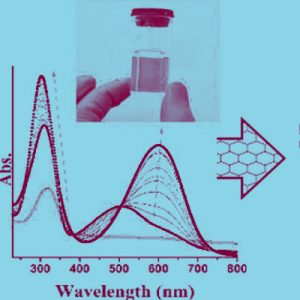
 At McMaster, a broad range of interests guides our researchers in their pursuit to understand the make-up of the world around us. Physical chemistry bridges the gap between the theories and techniques of modern-day physics and our understanding of chemical systems. Using advanced characterization and computational methods, physical and theoretical chemists work to unravel the phenomena that govern all aspects of the physical world.
Physical chemists apply and develop advanced characterization techniques to a diverse range of topics – energy storage materials for electric vehicles, biologically relevant proteins to understand degenerative diseases, complex surface properties and photo-induced molecular transformations. Theoretical chemists work to establish quantum mechanical methods to improve our understanding of all aspects of chemistry right down to the nature of chemical bonding.
McMaster’s state-of-the-art facilities enable the design and discovery of both experimental and computational methods to advance knowledge across all branches of chemistry. Areas of specialty include:
- Quantum mechanics and computational chemistry
- Advanced magnetic resonance techniques
- Optics and photo-induced transformations
- Synchotron-based x-ray methods
- Surface chemistry
Our Researchers:
Paul Ayers
Professor, Canada Research Chair in Theoretical Chemistry and Chemical Biology
Research focuses on: Mathematical methods, conceptual tools, and computational software for molecular modelling; New electronic structure theory methods; Concepts in quantum chemistry; Machine learning for chemical property prediction
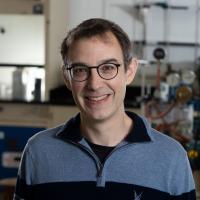
Paul Ayers
Professor, Canada Research Chair in Theoretical Chemistry and Chemical Biology
Randy Dumont
Associate Professor
Research focuses on:Relativistic quantum dynamics; quantum and semiclassical molecular dynamics; simulation of NMR spectra

Gillian Goward
Professor
Research focuses on:Magnetic Resonance Spectroscopy and Imaging of Materials for Alternative Energy Storage & Conversion; Lithium Ion Batteries & Fuel Cells
Our research group aims to apply advanced solid-state nuclear magnetic techniques, in combination with electrochemical characterisation, to the study of materials of interest as chemical power sources. Lithium ion batteries and proton exchange membrane fuel cells (PEM-FC) provide environmentally friendly energy alternatives. Emerging technologiesinclude sodium ion batteries, and sodium/lithium-air batteries, which are exciting, but so far poorlyunderstood & controlled. Solid-state NMR is well known for its ability to provide site-specific information on structure and dynamics. Weutilise multi-nuclear approaches including 7Li, 6Li, 23Na, and 1H, to investigate processes and interactions such as electrochemical transport, ionic conductivity,hydrogen-bonding,and polymer chain ordering or mobility. In recent years, the field of magnetic resonance has experienced rapid technological and methodological growth, allowing a broader range of materials questions to be addressed.
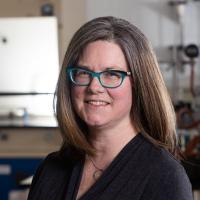
Adam Hitchcock
Professor Emeritus
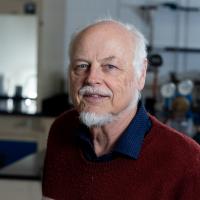
Peter Kruse
Professor, Associate Chair (Graduate Studies)
Research focuses on: Surfaces, interface and low-dimensional materials; their electronic and chemical properties; doping, mobility and pattern formation; applications in corrosion inhibitors and water quality sensors
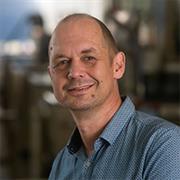
Peter Kruse
Professor, Associate Chair (Graduate Studies)
Giuseppe Melacini
Professor
Research focuses on: Pre-clinical molecular pharmacology of neurodegenerative diseases and cancer; intrinsically unstructured amyloidogenic proteins: protein kinases & signaling; functional protein dynamics and allosteric regulation; Nuclear Magnetic Resonance (NMR)
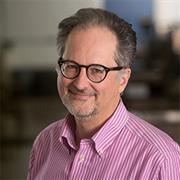
Kalaichelvi Saravanamuttu
Professor
Research focuses on:Sol-gel chemistry; self-assembly; photonics and photo-induced transformations

Rodrigo Vargas–Hernández
Assistant Professor
Research focuses on:
- Differentiable programming for computational chemistry
- Machine learning for physical sciences
- Inverse molecular design
In-silico simulations of molecular systems are challenging and it requires great computational resources to simulate real-size systems like chemical reactions, proton, and energy transfer in molecular aggregates, to mention a few. Therefore, there is a need to incorporate and develop numerical tools that scale for real-size simulations of molecular systems. My research group’s primary focus is on developing new numerical methodologies based on machine learning algorithms and modern tools to tack real-size quantum systems.
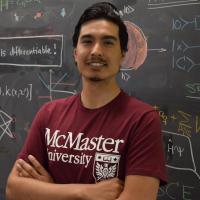
Paul Ayers
Professor, Canada Research Chair in Theoretical Chemistry and Chemical Biology
Research focuses on: Mathematical methods, conceptual tools, and computational software for molecular modelling; New electronic structure theory methods; Concepts in quantum chemistry; Machine learning for chemical property prediction
Paul Ayers
Professor, Canada Research Chair in Theoretical Chemistry and Chemical Biology
Research focuses on: Mathematical methods, conceptual tools, and computational software for molecular modelling; New electronic structure theory methods; Concepts in quantum chemistry; Machine learning for chemical property prediction
Randy Dumont
Associate Professor
Research focuses on:Relativistic quantum dynamics; quantum and semiclassical molecular dynamics; simulation of NMR spectra
Randy Dumont
Associate Professor
Research focuses on:Relativistic quantum dynamics; quantum and semiclassical molecular dynamics; simulation of NMR spectra
Gillian Goward
Professor
Research focuses on:Magnetic Resonance Spectroscopy and Imaging of Materials for Alternative Energy Storage & Conversion; Lithium Ion Batteries & Fuel Cells
Our research group aims to apply advanced solid-state nuclear magnetic techniques, in combination with electrochemical characterisation, to the study of materials of interest as chemical power sources. Lithium ion batteries and proton exchange membrane fuel cells (PEM-FC) provide environmentally friendly energy alternatives. Emerging technologiesinclude sodium ion batteries, and sodium/lithium-air batteries, which are exciting, but so far poorlyunderstood & controlled. Solid-state NMR is well known for its ability to provide site-specific information on structure and dynamics. Weutilise multi-nuclear approaches including 7Li, 6Li, 23Na, and 1H, to investigate processes and interactions such as electrochemical transport, ionic conductivity,hydrogen-bonding,and polymer chain ordering or mobility. In recent years, the field of magnetic resonance has experienced rapid technological and methodological growth, allowing a broader range of materials questions to be addressed.
Gillian Goward
Professor
Research focuses on:Magnetic Resonance Spectroscopy and Imaging of Materials for Alternative Energy Storage & Conversion; Lithium Ion Batteries & Fuel Cells
Our research group aims to apply advanced solid-state nuclear magnetic techniques, in combination with electrochemical characterisation, to the study of materials of interest as chemical power sources. Lithium ion batteries and proton exchange membrane fuel cells (PEM-FC) provide environmentally friendly energy alternatives. Emerging technologiesinclude sodium ion batteries, and sodium/lithium-air batteries, which are exciting, but so far poorlyunderstood & controlled. Solid-state NMR is well known for its ability to provide site-specific information on structure and dynamics. Weutilise multi-nuclear approaches including 7Li, 6Li, 23Na, and 1H, to investigate processes and interactions such as electrochemical transport, ionic conductivity,hydrogen-bonding,and polymer chain ordering or mobility. In recent years, the field of magnetic resonance has experienced rapid technological and methodological growth, allowing a broader range of materials questions to be addressed.
Adam Hitchcock
Professor Emeritus
Adam Hitchcock
Professor Emeritus
Peter Kruse
Professor, Associate Chair (Graduate Studies)
Research focuses on: Surfaces, interface and low-dimensional materials; their electronic and chemical properties; doping, mobility and pattern formation; applications in corrosion inhibitors and water quality sensors
Peter Kruse
Professor, Associate Chair (Graduate Studies)
Research focuses on: Surfaces, interface and low-dimensional materials; their electronic and chemical properties; doping, mobility and pattern formation; applications in corrosion inhibitors and water quality sensors
Giuseppe Melacini
Professor
Research focuses on: Pre-clinical molecular pharmacology of neurodegenerative diseases and cancer; intrinsically unstructured amyloidogenic proteins: protein kinases & signaling; functional protein dynamics and allosteric regulation; Nuclear Magnetic Resonance (NMR)
Giuseppe Melacini
Professor
Research focuses on: Pre-clinical molecular pharmacology of neurodegenerative diseases and cancer; intrinsically unstructured amyloidogenic proteins: protein kinases & signaling; functional protein dynamics and allosteric regulation; Nuclear Magnetic Resonance (NMR)
Kalaichelvi Saravanamuttu
Professor
Research focuses on:Sol-gel chemistry; self-assembly; photonics and photo-induced transformations
Kalaichelvi Saravanamuttu
Professor
Research focuses on:Sol-gel chemistry; self-assembly; photonics and photo-induced transformations
Rodrigo Vargas–Hernández
Assistant Professor
Research focuses on:
- Differentiable programming for computational chemistry
- Machine learning for physical sciences
- Inverse molecular design
In-silico simulations of molecular systems are challenging and it requires great computational resources to simulate real-size systems like chemical reactions, proton, and energy transfer in molecular aggregates, to mention a few. Therefore, there is a need to incorporate and develop numerical tools that scale for real-size simulations of molecular systems. My research group’s primary focus is on developing new numerical methodologies based on machine learning algorithms and modern tools to tack real-size quantum systems.
Rodrigo Vargas–Hernández
Assistant Professor
Research focuses on:
- Differentiable programming for computational chemistry
- Machine learning for physical sciences
- Inverse molecular design
In-silico simulations of molecular systems are challenging and it requires great computational resources to simulate real-size systems like chemical reactions, proton, and energy transfer in molecular aggregates, to mention a few. Therefore, there is a need to incorporate and develop numerical tools that scale for real-size simulations of molecular systems. My research group’s primary focus is on developing new numerical methodologies based on machine learning algorithms and modern tools to tack real-size quantum systems.